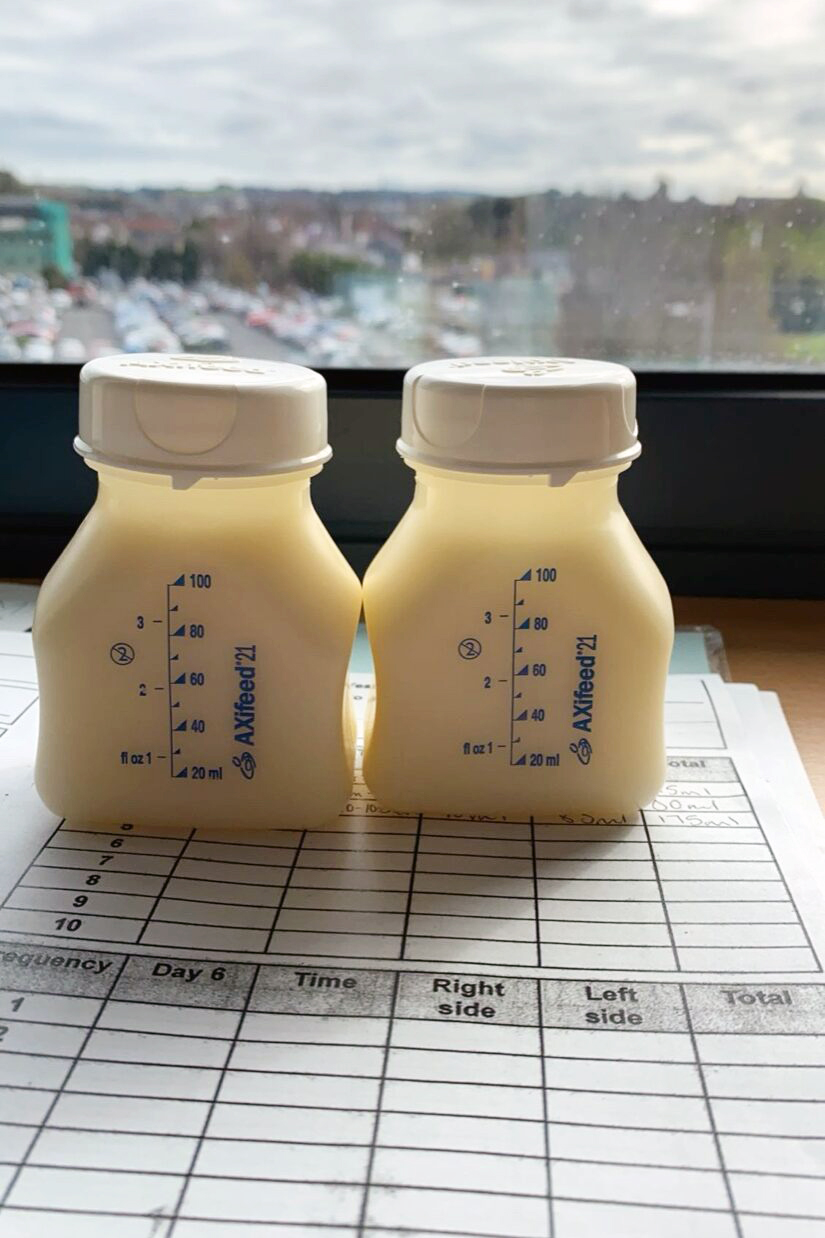





Throughout history, babies who could not feed at the breast and moms who could not breastfeed their babies were faced with a serious problem. Before the modern bottle was invented, they needed to find another breastfeeding woman who could hopefully supply enough milk for both babies .
The Mechanics of Bottle Feeding
Thankfully, bottle feeding is an option today and is now an essential part of many parents’ lives. There is a seemingly endless list of options for bottles now. Having a wide selection to choose from is great but when parents are trying to make decisions for feeding their babies it can quickly become overwhelming. Add the fact that every single company markets their bottle as somehow being the best option a baby could possibly have and you end up with a recipe that actually undermines the ability for parents to feel confident in their choices. Breaking down the mechanics of bottle feeding into digestible language can provide the confidence new parents need to select the right bottle for their baby.
The first thing I want to make clear is that this information is not intended to shame any parents who are bottle feeding their babies. This is intended to help parents make decisions for their babies that they feel confident in. Oftentimes the decision to bottle feed comes after some feeding choices have been taken away or complicated by personal or health factors. And there can be a lot of feelings surrounding that. No matter how you have arrived at the decision to bottle feed your baby you are valid in your choice. This piece is meant to be a small part of supporting your journey.
Oftentimes the decision to bottle feed comes after some feeding choices have been taken away or complicated by personal or health factors
Bottles and Baby’s Muscle Development
While babies can be bottle fed now, biologically, babies are built to breastfeed, their craniofascial muscles are meant for it. What this means is that we need to find bottles that stimulate the baby’s muscle development in a similar way.
The invention of the bottle is great, we need tools to feed babies differently. As a baby breastfeeds with a nice deep latch, the nipple enters their mouth and extends all the way back to the soft pallet. The baby’s cheek muscles and lips form a seal with the lips flared, and as the tongue widely cups the nipple and pulls down it creates a vacuum. This expresses milk from the breast and a rhythmic pattern of sucking, swallowing and breathing through the nose is established . This under-pressure created when breastfeeding helps to develop the baby’s facial muscles as they feed every day and even helps to shape the muscles and coordination required for eating solids later .
What To Consider When Looking At Bottles
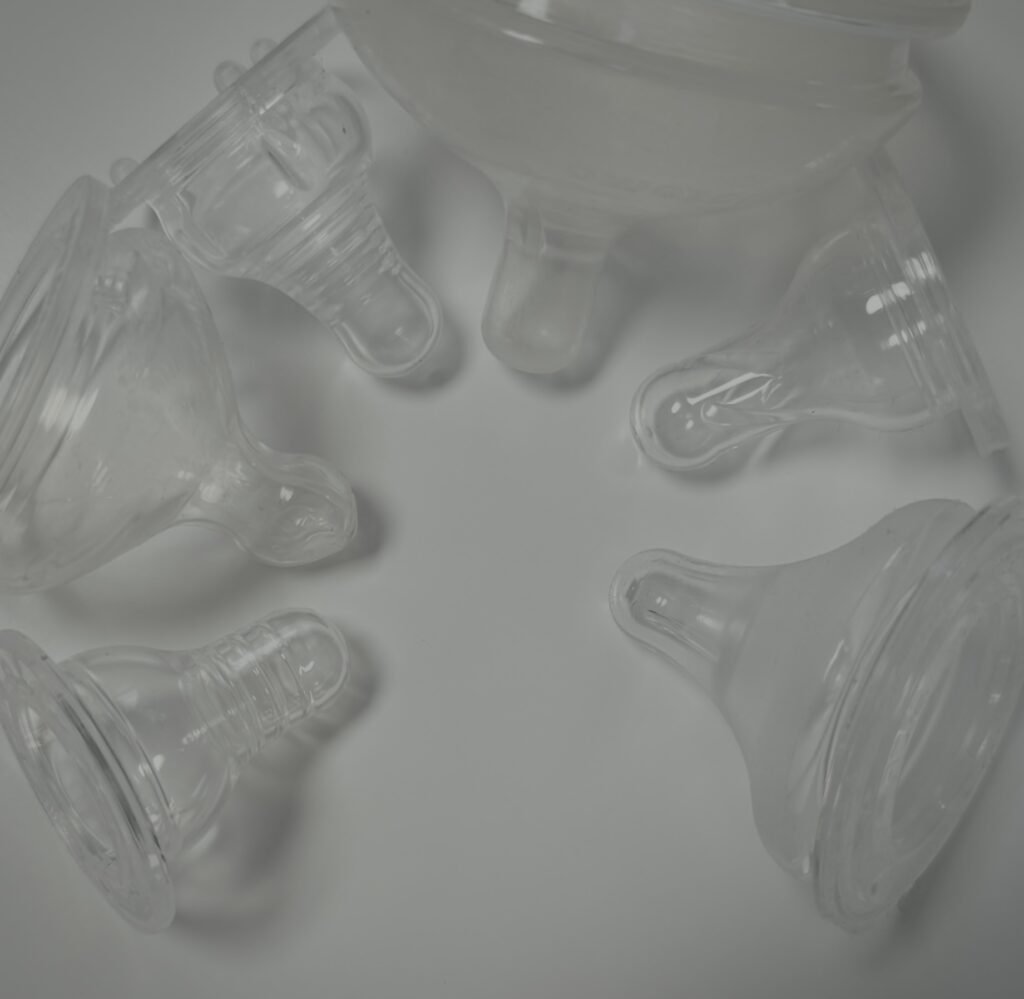
Ideally babies should be prompted to use the same muscle groups while bottle feeding that they do for breastfeeding. There are a few things to think about when looking at bottles. Many bottles on the market will drip liquid out of the nipple when tipped upside down even with the slowest flow nipples. Parents can test this out for themselves if they have a selection of bottles at home. This means that many bottles don’t require a perfect seal for the baby to get the milk/formula. Milk or formula will dump into the baby’s mouth with these bottles regardless of the mechanics that the baby is using.
In addition, “slow flow” isn’t an actual measurable metric that companies need to follow. It is individual to each company and is simply saying that this is the bottle nipple they offer with the slowest flow out of all of their options. Without creating that seal, the cheek muscles, lips and tongue are not prompted to put in the same effort and therefore do not develop the same way.
The Importance of a Deep Latch
“Just as occurs with the baby bottle, oral habits have a direct impact on the oral motor and craniofacial development, as well as on bone growth” . Many bottle nipple shapes instead prompt a shallow latch and a chewing motion from the jaw. Many bottles are advertised as “breast like” because they have a wide base. Oftentimes these bottles have a more straw-like nipple that gets wide very quickly at the base. It is difficult for babies to get a deep latch on these bottles. The visual of a wide base means nothing when it comes to the breast like-ness of a bottle.
If we want a bottle that prompts the baby’s mouth to behave in the same way as it does when latched to a breast then we need to disregard the visual comparison to the breast and focus on the mechanics of eating.
Understanding Oral Ties in Babies
Parents might be asking themselves, why do they need to care about the mechanics if the baby is still taking in the calories they need to grow? If they’re getting the food they need and they’re gaining weight then what’s the problem?
Getting the calories into the body is a big part of thriving but it isn’t the only part. For one, babies who are exclusively bottle fed with bottles that don’t develop their oral function don’t stand a chance for being assessed for oral ties. Oral ties such as tongue ties (ankyloglossia) are noticed in breastfeeding relationships often because mom can tell something is wrong as she is breastfeeding.
Assessing An Oral Tie
An oral restriction in the baby’s mouth will limit the space that the baby has in their mouth or limit the functionality of their tongue while nursing and it can be painful for mom . Parents who are bottle feeding their children can still look out for symptoms of oral ties. Since we don’t feel pain on a bottle, what we can look for are other signs that a baby isn’t latching well.
A common idea that I often hear circulating around both parents who are breastfeeding or bottle feeding, is that the baby simply doesn’t like that bottle. Parents are told to try different bottles until they find one baby “likes.” The truth is, if a baby is struggling to latch onto a bottle that stimulates the oral function that breastfeeding does, then they need to be assessed for oral ties just as they would if they were experiencing those symptoms while breastfeeding. Parents who are bottle feeding deserve the same attention to assessing oral ties that breastfeeding parents do.
Parents who are bottle feeding deserve the same attention to assessing oral ties that breastfeeding parents do.
Signs A Baby Is Struggling To Latch
Some signs that a baby might be struggling to latch would be if the baby can be heard making a clicking sound while they’re eating. This means air is getting into their mouth while they’re trying to suck, which leads to air getting sucked into the stomach and increased gasiness/fussiness. Milk might be leaking out of the corner of the baby’s mouth if they can not make a nice seal with their lips. Or they might make sputtering sounds and/or unlatch off the nipple repeatedly during a feed.
The problem with these symptoms is that they could simply be symptoms that the bottle nipple isn’t actually designed for a baby to latch the way their body is designed to or they can be symptoms of a bigger issue. A parent using a poorly designed bottle could be experiencing these symptoms with their baby but they wouldn’t know if it is from the bottle nipple not working with a baby’s anatomy, or if there is an underlying latch issue that needs to be assessed. Using a bottle that is appropriate for a baby’s anatomy eliminates this ambiguity. Even if the baby is exclusively bottle fed, the parent knows where to start when experiencing symptoms of poor latch.

Choosing the Right Type of Bottle
So how are parents supposed to make decisions about which bottles to use?
While it might be nice, writing a list of “good” vs “bad” bottles isn’t necessary. Listing out brands that I would recommend and brands I would stay away from isn’t very helpful when new bottles come on to the market all the time and current products are constantly being updated or redesigned. In writing this, my hope is that someone could walk into the store and pick a good option from the wall of bottles.
Bottles that prompt oral stimulation similar to the breast have a gradual slope, or could be described as tapered. No bottle on the market is a perfect triangle but the closer to that, the better. Bottles that prompt a deep latch don’t have long narrow “straw like” tips. A straw-like nipple might look like it can perform the function of getting all the way back to the soft pallet like a human nipple would but since it is narrow, the babies’ tongue does not get to widely cup around the nipple and many babies will end up chomping on the tip of the bottle nipple.
Bulb-like tips on nipples that are wider at the tip, get narrower and then wider again have the same issue. Some bottle designs also have “steep shoulders” or get wide quickly, at a dramatic angle. This should also be avoided.
Beware of ‘Breast-Like’ Bottles
Unfortunately, bottles with steep shoulders and straw like nipples are often marketed as “breast-like”, which isn’t true at all. For the cheeks and lips to make a nice seal and for the tongue to cup the nipple in a similar way as it would to the breast the slope of the bottle nipple needs to be gradual. A steep shoulder on a bottle acts more like a wall that the baby’s lips are up against. This is not to say that all wide necked bottles are bad and parents should only look for narrow necked bottles.
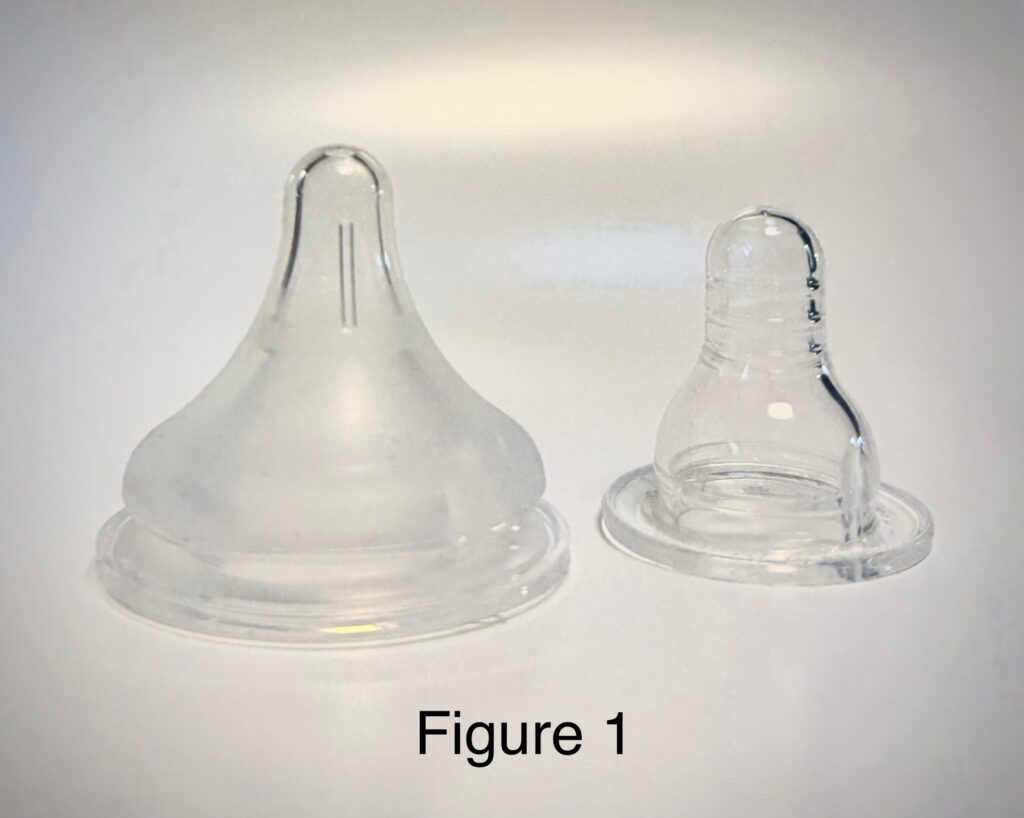
There are many wide necked bottles on the market with tapered nipple designs. An exception being that if you have a small or premature baby, a narrow necked bottle might be more appropriate for their small mouth at first. Figure 1 demonstrates a wide and a narrow necked bottle nipple that are both good examples of “tapered”.
Finding a bottle that is appropriate for a baby’s innate feeding needs can be simple, but ignoring all of the noise created by marketing and misinformation can be challenging. Hopefully now, looking at a selection of bottles and confidently choosing one or two to try is simpler with the understanding of how and why a baby’s latch to a bottle matters.
Finding a bottle that is appropriate for a baby’s innate feeding needs can be simple, but ignoring all of the noise created by marketing and misinformation can be challenging.
References
1. Stevens EE, Patrick TE, Pickler R. A history of infant feeding. J Perinat Educ. 2009 Spring;18(2):32-9. doi: 10.1624/105812409X426314. PMID: 20190854; PMCID: PMC2684040.
2. Pires SC, Justo Giugliani ER, Caramez da Silva F.. Influence of the duration of breastfeeding on quality of muscle function during mastication in pre-schoolers: a cohort study. BMC Public Health. 2012;12:934. doi: 10.1186/1471-2458-12-934.
3. Buryk M, Bloom D, Shope T. Efficacy of neonatal release of ankyloglossia: a randomized trial. Pediatrics. 2011 Aug;128(2):280-8. doi: 10.1542/peds.2011-0077. Epub 2011 Jul 18. PMID: 21768318.
4. Neiva FC, Cattoni DM, Ramos JL, Issler H. Early weaning: implications to oral motor development. J Pediatr (Rio J) 2003;79(1):7–12.