



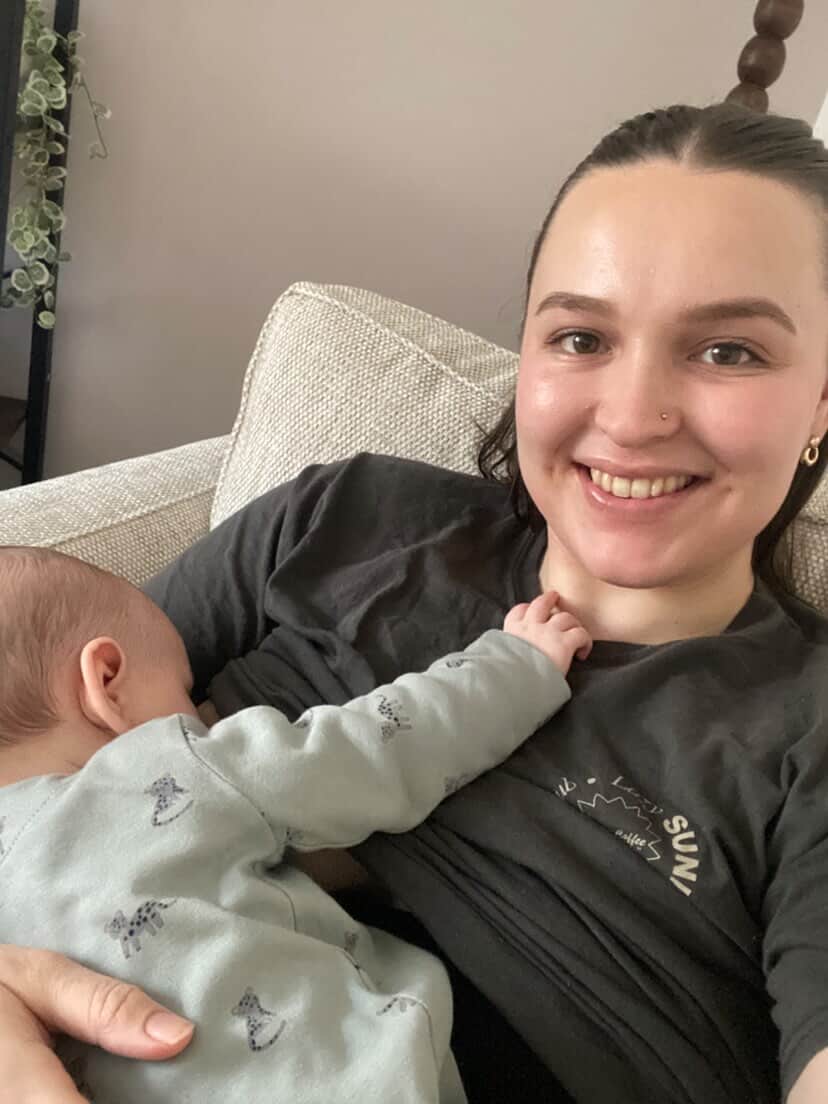

Today is IBCLC Day – a moment to recognise International Board Certified Lactation Consultants and the specialist support they provide to families.
IBCLCs are the highest qualified breastfeeding specialists. They support parents through everything from antenatal preparation to complex feeding challenges – often at some of the most vulnerable moments of early parenthood.
Ahead of IBCLC Day, I asked the Boobingit community to share their experiences.
Here’s what you said.


“No question was too small.”
Rachel attended a preparing-to-breastfeed workshop while pregnant with her first baby:
“Whilst pregnant with my first baby, I attended a ‘preparing to breastfeed’ workshop with Miriam & Kathryn (The Lactation Corner). No question I asked was too small and the ladies shared so much detailed and helpful information.
I successfully fed my daughter for 2 & a half years, guided by the knowledge and tips from Miriam & Kathryn through each stage. Knowing what was ‘normal’ and expected at each stage of my journey and the overall science behind breastfeeding was game changing. Both ladies are always at the end of a message and happy to help with any troubleshooting too.
I successfully fed my daughter for 2 & a half years, guided by the knowledge and tips from Miriam & Kathryn through each stage.
I attribute so much of my success to these ladies and recommend them to anyone that will listen!”
Four years later, pregnant again, she repeated the workshop to “set myself up for the same success.”
Antenatal preparation matters. Knowing what’s normal changes everything.

“More than advice – I was supported and reassured.”
Boobingit contributor and mum of three Colette Myers reached out to the IBCLC Shel Banks in 2020 during the height of the pandemic:
“I contacted an IBCLC, Shel Banks, to help with feeding issues and our consults were all done via Zoom. My son was struggling with reflux, and I also suspected a tongue tie, as feeding was painful.
Shel gave advice about positioning and what to do after feeds to try to reduce the reflux symptoms…but more than anything I was supported and reassured.”
Shel gave advice about positioning and what to do after feeds to try to reduce the reflux symptoms…but more than anything I was supported and reassured.
She went on to explore dietary changes, tongue tie assessment and osteopathy — all while exclusively breastfeeding through months of sleep deprivation.
“So often women struggle alone or without proper support, but I say time and time again, make sure you have the number of someone who can offer specialist feeding support. Please don’t rely solely on your GP surgery; they simply don’t have the training in this area.
It really wasn’t enjoyable until months in. But it was absolutely worth it.”
Specialist support doesn’t just fix positioning. It holds families through the hard parts.

“Even when we hit dead ends, they validated me.”
Alice Bradley’s baby was born late preterm and lost 17% of her birthweight. Hospital staff were understandably concerned. NG feeding was introduced. Pressure mounted.
Despite being a peer supporter herself and having breastfed three older children, she knew she needed specialist input this time.
She went on to see multiple IBCLCs – each offering guidance, referrals, validation and reassurance – eventually being signposted to dual-qualified IBCLC dietitians.
“Even when we’ve come against a bit of a dead end they have each been useful, and very validating when a lot of what I hear is that my baby isn’t okay.”
Her baby is now seven months old, exclusively breastfed, bright and thriving – just small.
Sometimes IBCLCs are not the final answer. But they are often the calm, informed voice in the middle of medical complexity.

“What this lady doesn’t know isn’t worth knowing.”
Meg accessed IBCLC Shel Banks’ support during one of the most complex periods of her breastfeeding journey. Her baby was experiencing faltering growth. There were concerns about possible allergies, suspected reflux and the relentless exhaustion of triple feeding.
“Shel validated the difficulties we were having, communicated with my local infant feeding team, advocated for us when I felt so lost and alone. She has remained a connection as we continue to breastfeed at 4 years, and an IBCLC I have the utmost respect for! What this lady doesn’t know about breastfeeding isn’t worth knowing!
Meg also credits several other IBCLCs for shaping her journey.
IBCLC Kathryn Stagg provided crucial guidance around faltering growth and weaning off top-ups – helping Meg step away from triple feeding and move toward her feeding goals.
IBCLC Alice Lucken (Babyetal) offered moral and emotional support while Meg navigated life with a very unsettled baby, sharing evidence-based information about reflux, tongue tie, medication and alternatives.
And IBCLC Lucy Webber’s publicly available resources became an invaluable source of information – not just for Meg, but for the families she now supports herself.
Finally, through her local NHS infant feeding team, she was connected with Amanda, founder of Cheshire Baby Support, who dedicated hours to lengthy phone calls — problem-solving, coordinating care and holding space when things felt traumatic.
Meg’s story is a powerful reminder that sometimes it takes a network of skilled professionals to carry a family through.
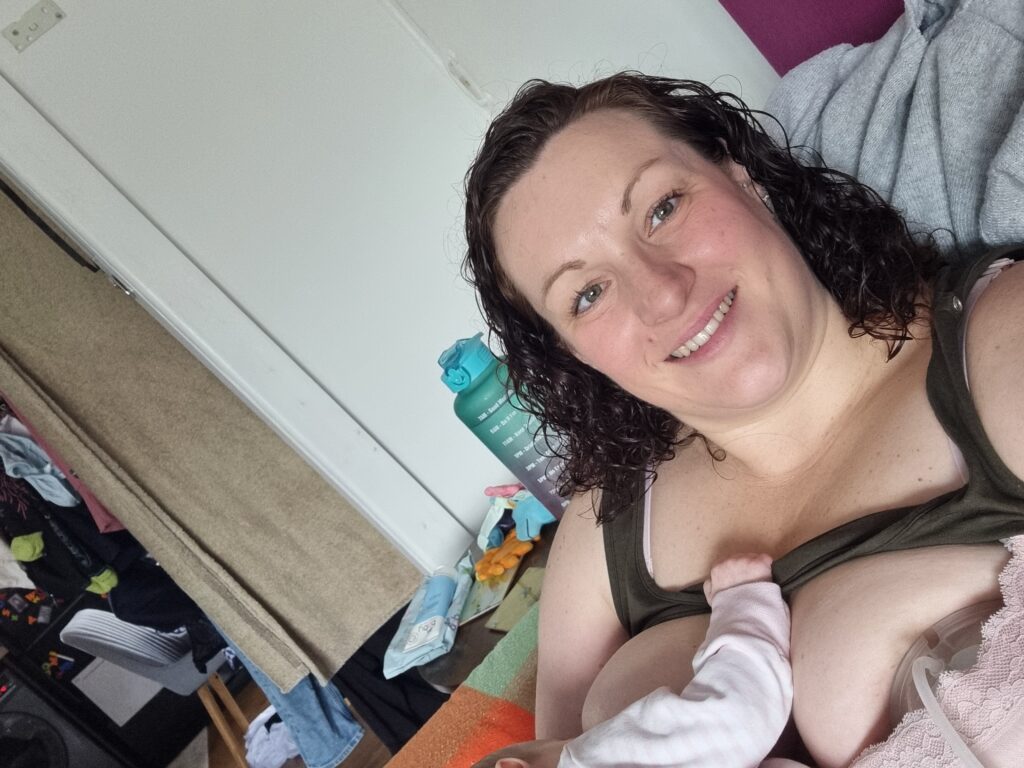
“She was the guiding light I needed.”
Katrina went through a difficult time with establishing breastfeeding her second daughter – enduring constant weigh-ins and hospital visits. She decided to take matters into her own hands when she paid for the help of an IBCLC.
“My IBCLC Jenny Charles gave me such a confidence boost, she listened to me… She was the guiding light I needed to get me through some of the darkest early times.”
And that may be the thread running through all these stories.
IBCLCs provide clinical expertise – but they also provide confidence.
They listen.
They troubleshoot.
They validate.
They empower.
Why IBCLCs Matter
Breastfeeding is biological – but in modern society, many families don’t grow up seeing it. Generational knowledge has been fragmented. Medical systems are stretched. Misinformation is everywhere.
IBCLCs bridge that gap with specialist, evidence-based care.
On IBCLC Day, we celebrate the professionals who:
- Protect informed choice
- Support complex feeding journeys
- Advocate for families
- And help parents continue when they want to continue
To every IBCLC reading this – thank you.
And to every parent who has reached out for specialist support – your story matters.
This article is supported by Ardo.
Over the years, Ardo has worked alongside lactation professionals worldwide to support breastfeeding families with evidence-based pump technology and education. Supporting IBCLCs means supporting better outcomes for parents and babies.